
Emperors and conquest · Person
Claudius
The emperor who ordered the invasion of AD 43, beginning the military conquest that created the Roman province of Britannia.
Also found as: Tiberius Claudius Caesar Augustus Germanicus
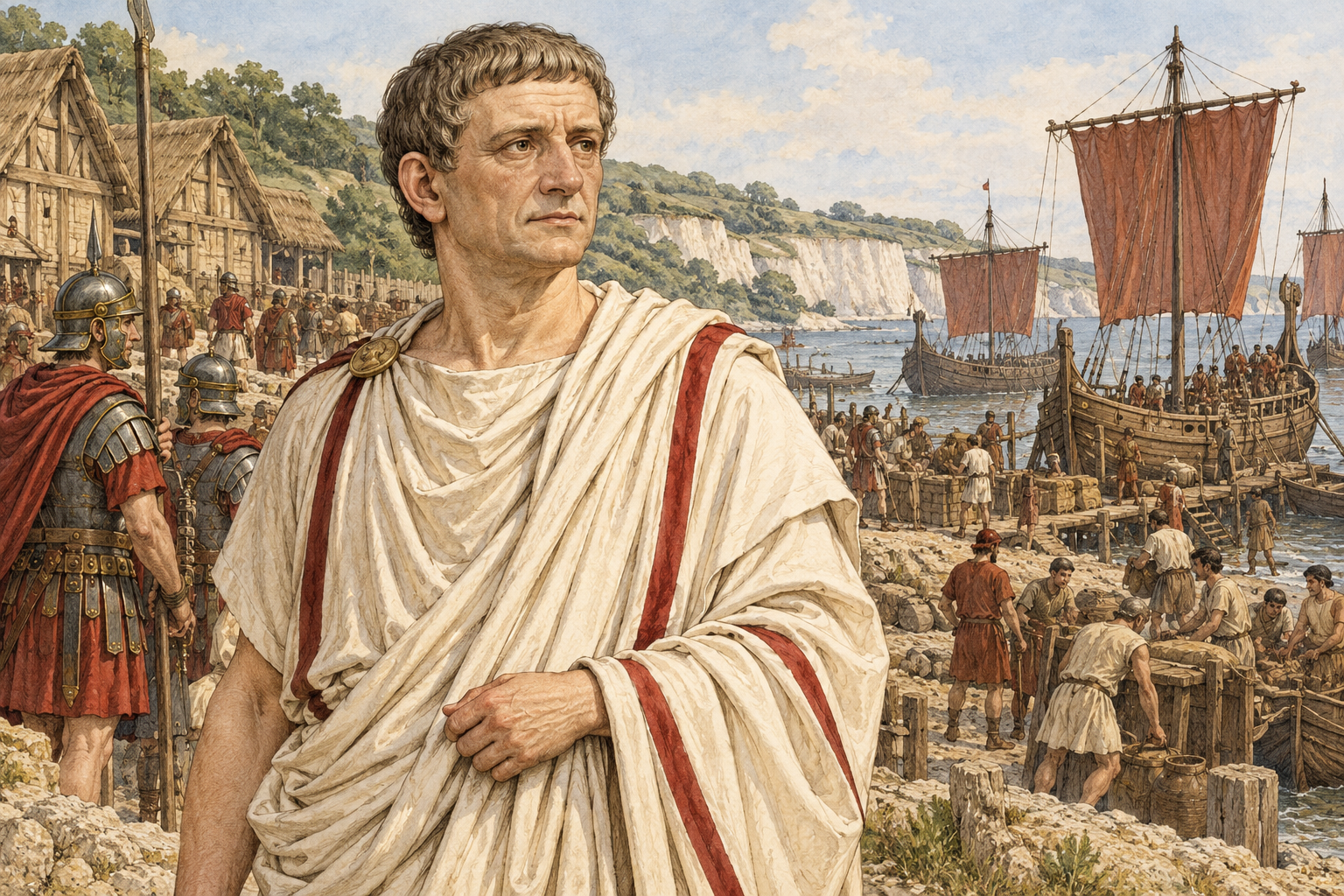
Claudius was Roman emperor from AD 41 to 54. His reign brought the invasion of Britain in AD 43, an undertaking that offered the emperor military prestige as well as an opportunity to expand Roman power.
The invasion army crossed the Channel and advanced inland. Richborough in Kent is closely associated with this operation, although historians and archaeologists continue to discuss the precise landing arrangements.
Claudius himself came to Britain during the campaign and took part in the final advance on Camulodunum, now Colchester. His name therefore connects imperial politics in Rome with the early military occupation of southern Britain.
Objects offer another way into his story. A bronze head identified as Claudius, found at Rendham in Suffolk, is now in the British Museum; a cast is held by Cambridge’s Museum of Classical Archaeology. Such portraits carried the emperor’s presence into public spaces far from Rome.
Context and evidence
Separate the emperor’s visit from the work of the army throughout the campaign. Likewise, the surviving portrait head is evidence for an imperial image in Roman Britain; it does not show Claudius personally standing at the place where the object was found.
Sources for this entry
Romans in Britain · People · Places · Learning resources