
Resistance and rebellion
Caratacus
A leader of resistance whose capture became a carefully staged Roman victory.
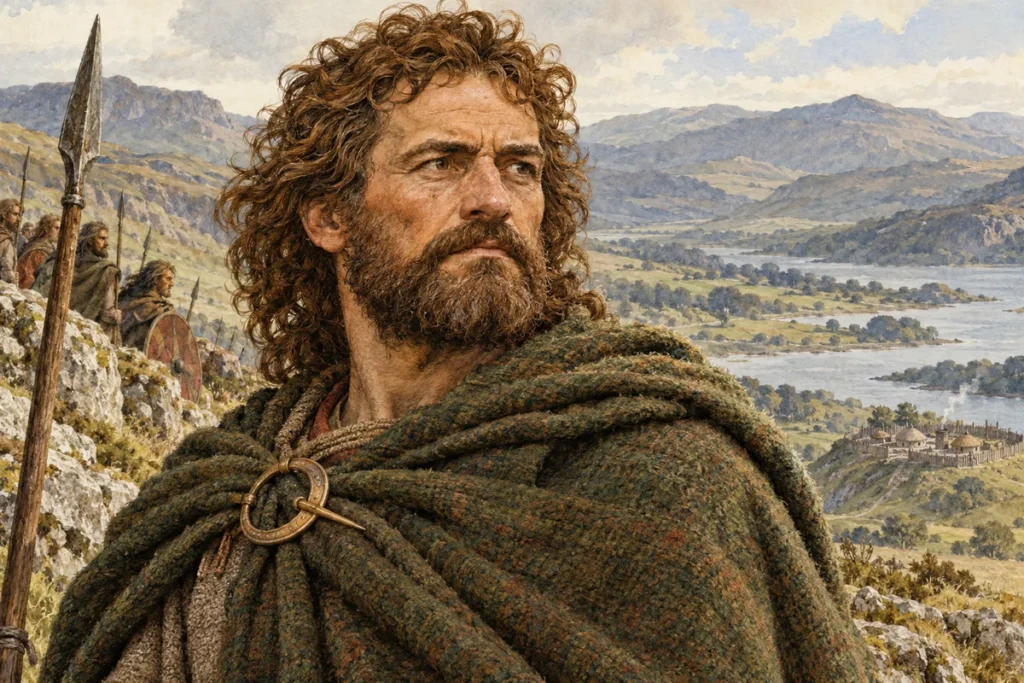
Also found as: Caradog, Caradoc
Caratacus resisted Roman expansion in the years after the invasion of AD 43. His campaigns connected resistance in south-eastern Britain with fighting further west, including the peoples whom Roman writers called the Silures and Ordovices.
Tacitus describes his defeat, flight to the Brigantian queen Cartimandua and capture after she handed him to Rome. Displayed in the capital with members of his family, Caratacus became part of a public celebration of imperial success. Claudius spared him after the speech reported in the Annals.
The speech is part of Tacitus’s historical writing, not a surviving transcript. His account shows how Rome could turn an enemy’s reputation into a demonstration of imperial power. The exact location of Caratacus’s final battle remains disputed.
Context and evidence
Notice who controls the setting of the story: the conquerors arrange the procession, the emperor grants mercy and a Roman author supplies the narrative. Later traditions need their own evidence. A familiar place-name does not settle where a battle happened.
Sources and further reading
Romans in Britain · People · Places · Learning resources