
Towns and daily life
Roman York
Explore Eboracum through fortress remains, museum objects and the city beneath later York.
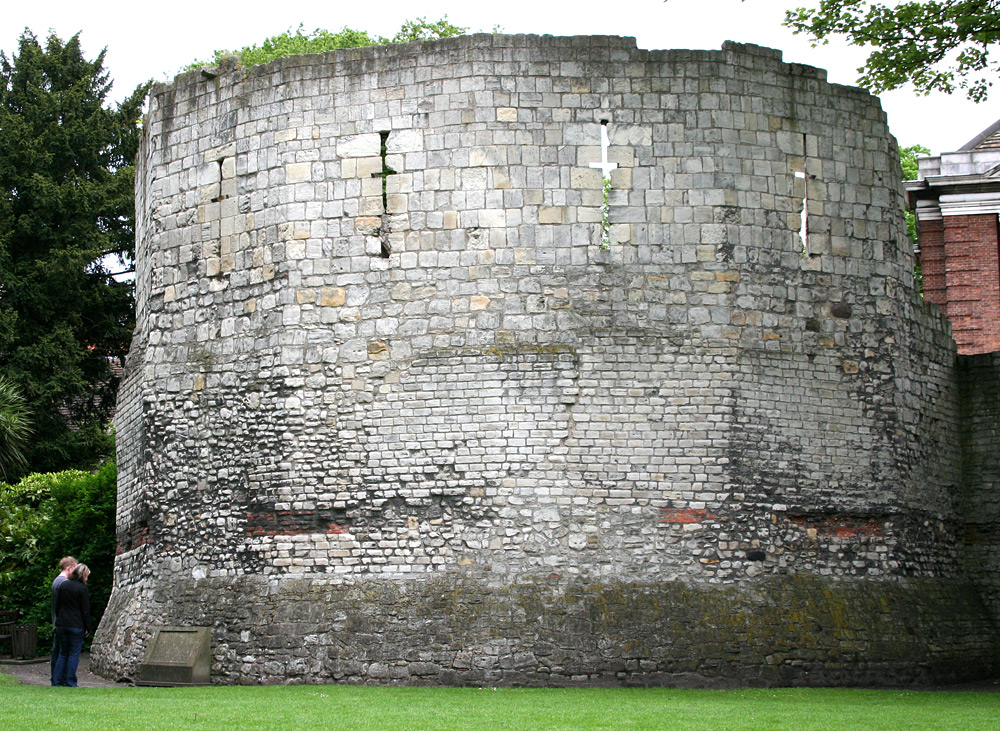

Roman York, known as Eboracum, developed around a legionary fortress founded in the early AD 70s. Civilian settlement grew alongside the military presence, and the city later held the status of a colonia.
The surviving defences are one part of that story. Sections of fortress wall and the Multangular Tower can be explored around Museum Gardens, while later city walls sometimes follow Roman lines. The tower itself includes work from more than one period, so visible height alone does not date a structure.
Yorkshire Museum collections bring people back into the landscape through inscriptions, objects and domestic remains. York also connects with the deaths of Septimius Severus and Constantius and the elevation of Constantine. A city trail works best when it links these episodes to specific evidence rather than treating every later landmark as a Roman survival.
What to look for
- Compare the fortress area with the civilian settlement across the Ouse.
- Use the city’s historic-environment information to separate Roman masonry from later work.
- Connect a museum object or inscription with a named person or place.
Plan a visit
Use the official information below for current opening, admission, access and any closures. Details can change with the season. A site plan is useful both before a visit and when reading the remains on the ground.
Sources and further reading
Romans in Britain · People · Places · Learning resources